Is the component internally sound?
MQS capability
Digital Radiography and CT
What it helps establish
Internal condition of fuzes, shells and ammunition without destructive sectioning.
 Contact us
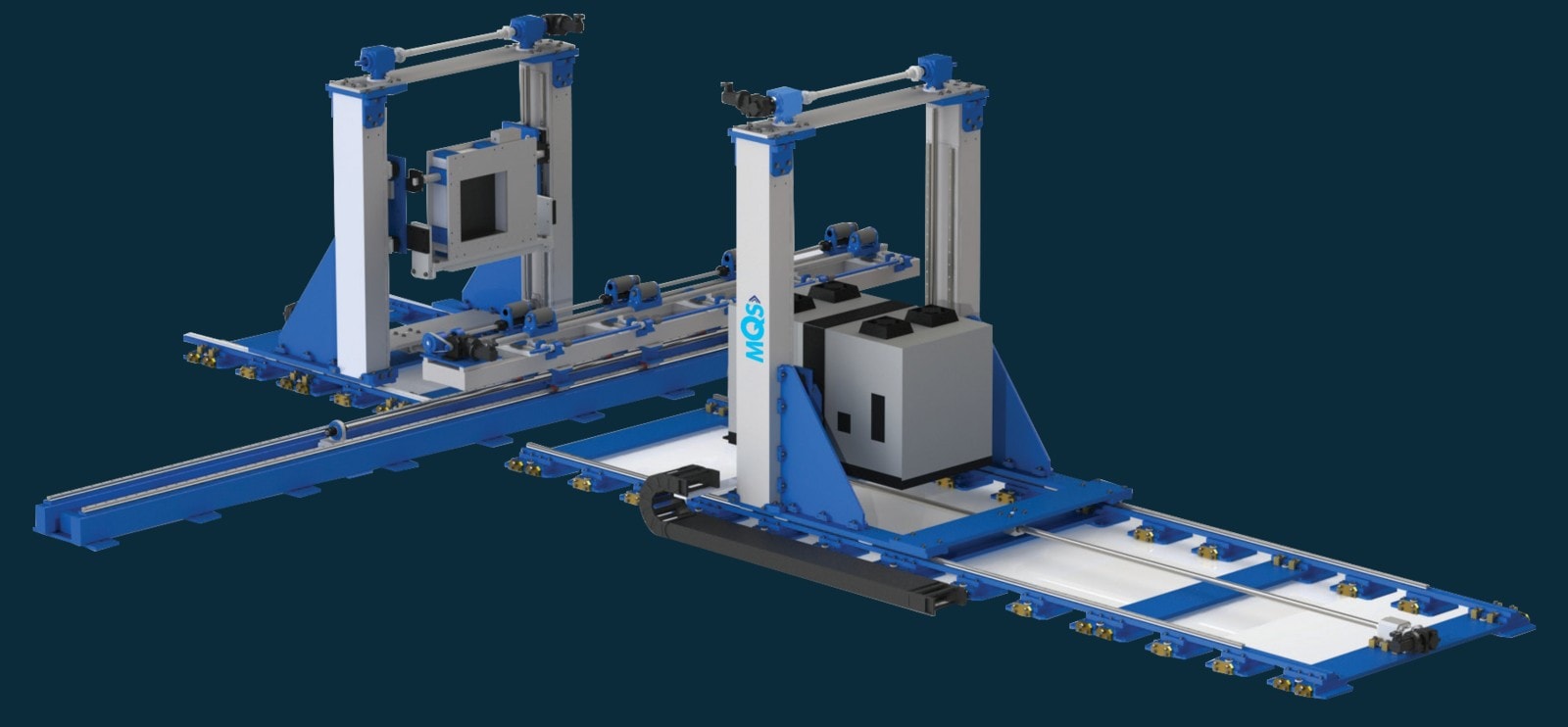
Defense and Securities
Custom requirements. Engineered solution.
MQS combines industrial X-ray inspection with custom Automated Test Equipments to help defence manufacturers verify both internal integrity and functional performance across fuzes, ammunition and mission critical assemblies.
Talk to an EngineerIndustry overview
Defence quality cannot be reduced to one inspection method. Some risks are hidden inside the component. Others appear only when the assembly is powered, actuated or tested in sequence. MQS addresses both.
MQS capability
Digital Radiography and CT
What it helps establish
Internal condition of fuzes, shells and ammunition without destructive sectioning.
MQS capability
Automated Test Equipments
What it helps establish
Electrical, electronic and electromechanical performance, fault diagnosis and final functional verification.
What defence programs need
Repeatable inspection of components with different geometries, calibres and internal configurations.
Automation that reduces operator dependence while supporting higher throughput and consistent execution.
Functional verification of assemblies and subsystems during design, production, integration and maintenance.
Traceable test and inspection outputs that support engineering review and quality records.
Engineering flexibility when an off the shelf inspection or test system does not fit the requirement.
Capability pillars
The capabilities are complementary. X-ray and CT reveal internal condition. Automated Test Equipments verify function and performance. Together, they support a broader verification strategy for defence manufacturing.
Custom built indigenous digital radiography systems for electronic and mechanical fuzes, including automated configurations and swivel mechanisms for faster inspection cycles.
Digital X-ray systems for ammunition of different calibres, with automated handling, shell rotation, indexing and configurable inspection presets.
Custom functional test systems for critical defence assemblies and subsystems where standard test equipment cannot meet the test objective or interface requirement.
Portable, battery-powered real-time X-ray viewing for rapid stand-off inspection in security, tactical and field environments.
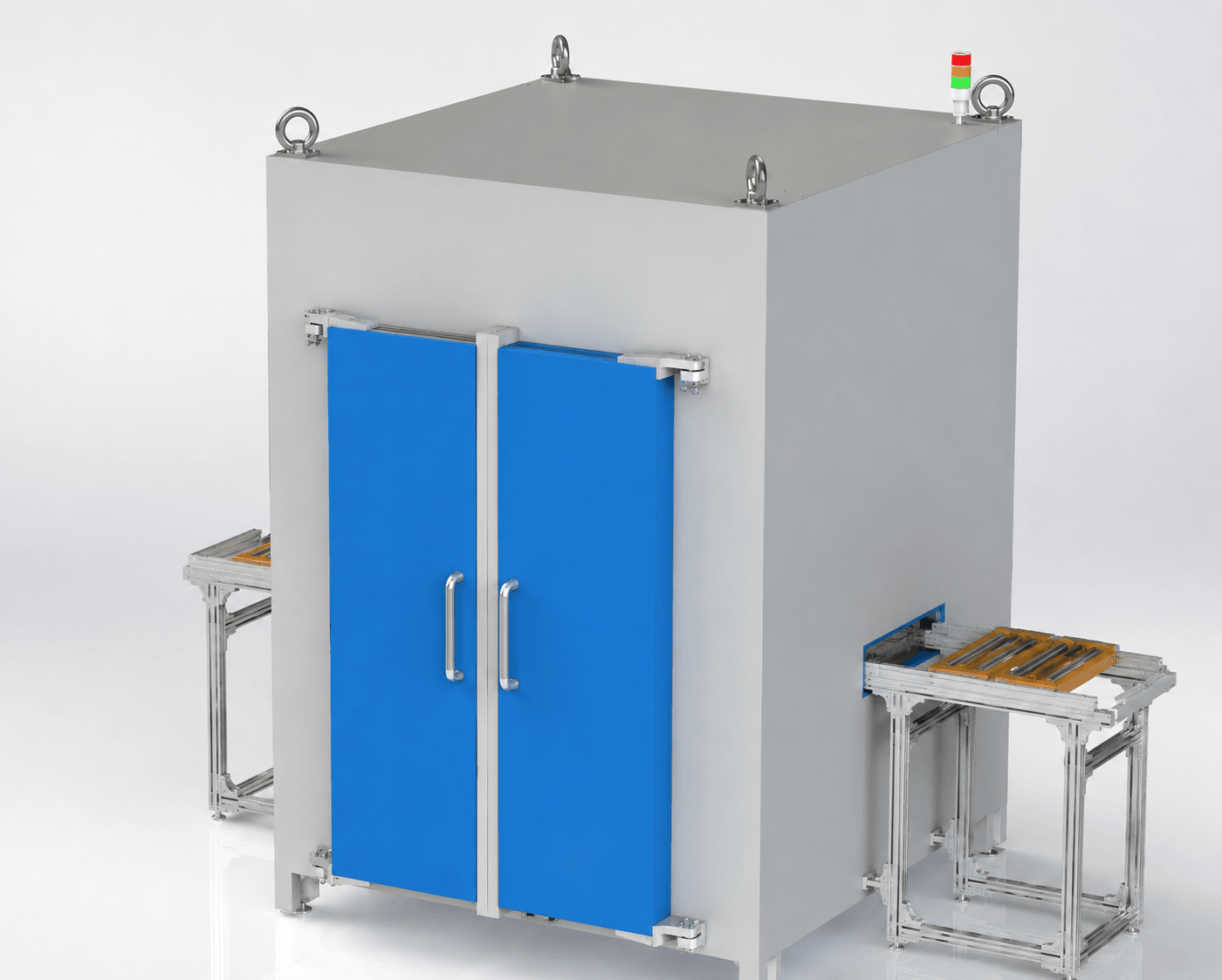

Fuze Inspection Systems
MQS has developed custom built indigenous fuze inspection systems for digital radiography of electronic and mechanical fuzes. The platform can be engineered around the fuze geometry, required X-ray configuration and inspection workflow.
Digital radiography for internal inspection without cutting or dismantling the fuze.
Selected systems use a swivel mechanism to improve cycle time and support higher productivity.
Cabinet and manipulator architecture can be customized to suit the user requirement and selected source configuration.
Where it fits: artillery fuze and multi model hand grenade inspection requirements where repeatability, automation and internal visibility are important.
Shell & Ammunition Inspection
MQS develops X-ray inspection solutions for ammunition across different calibres, with the system architecture selected according to shell size, material thickness, inspection depth and production requirement.
The solutions can be supplied in two broad configurations: cabinet based systems for suitable shell sizes and energy ranges, and LINAC based systems installed in shielded bunkers for larger, denser or higher penetration applications. MQS systems can also incorporate automated handling, shell rotation, indexing and preset inspection sequences to support repeatable inspection across different diameters and production workflows.
Explore Solution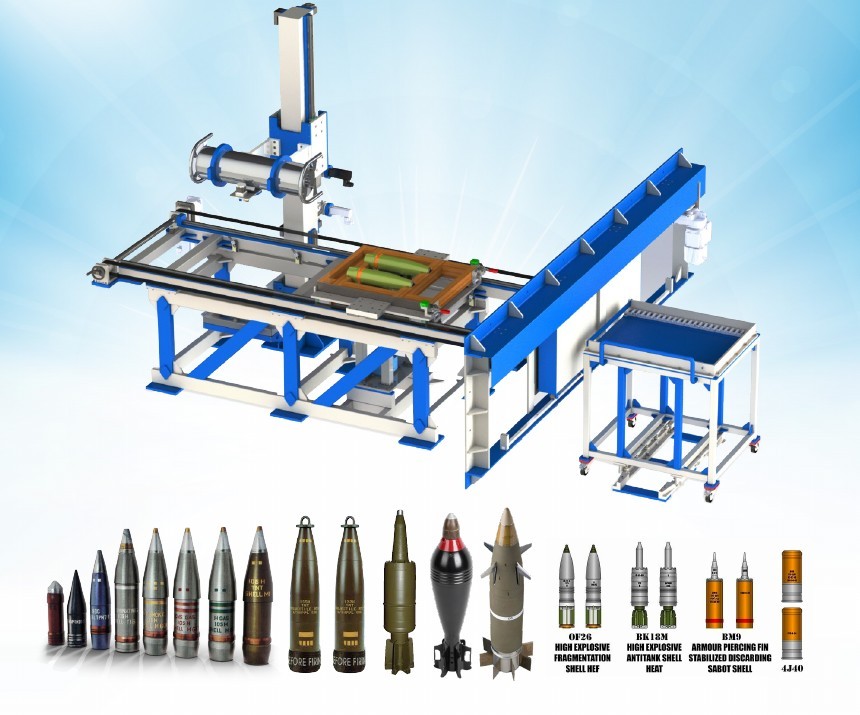
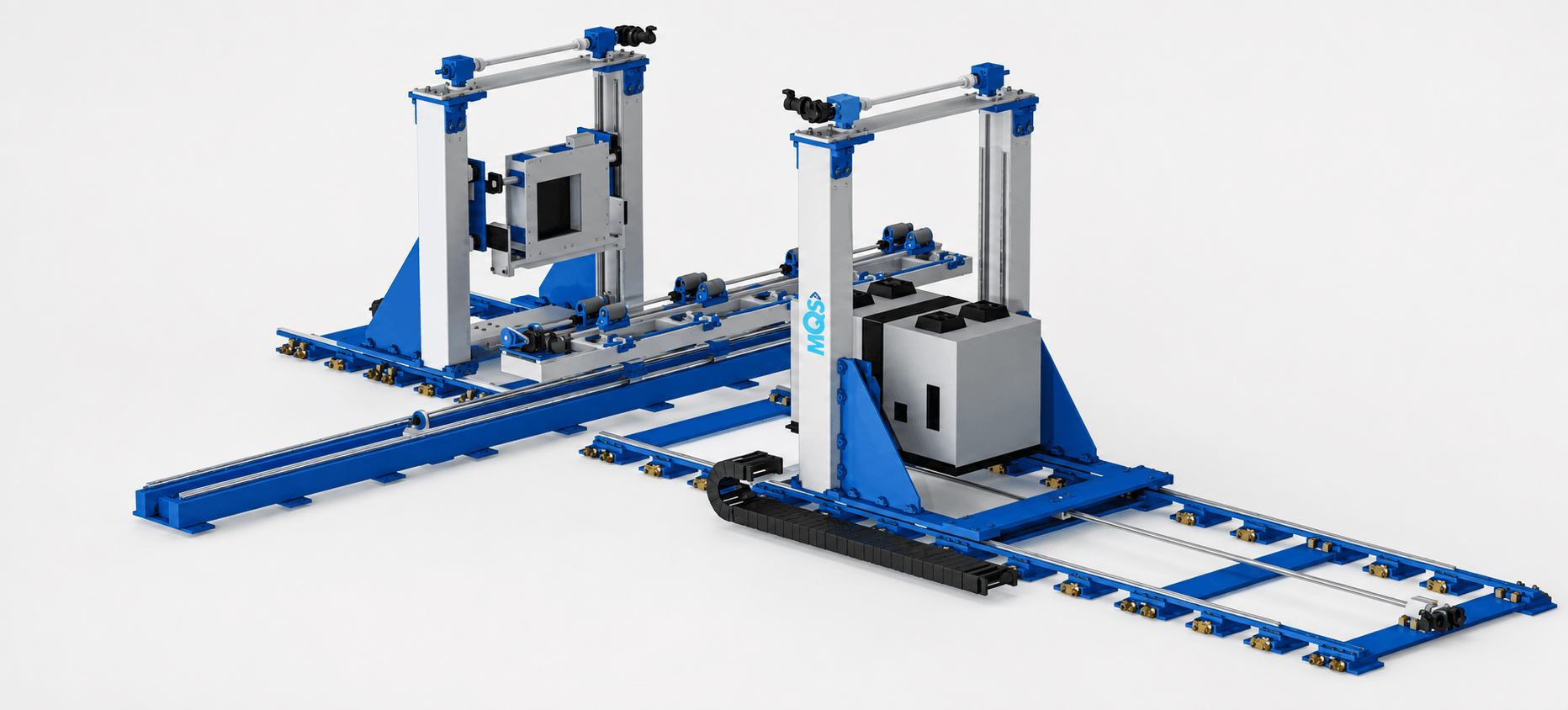
LINAC based Digital Radiography
Where conventional cabinet based X-ray is not sufficient, MQS can engineer LINAC based Digital Radiography systems in shielded bunkers for high penetration inspection of large calibre ammunition. The LINAC solution is designed for high throughput inspection and traceability of 155 mm shells.
One station is used for X-raying while the second station supports shell rotation and indexing.
Configured presets can automate the inspection sequence for shells of different diameters.
Source options from 160 kV through 450 kV, with high energy configurations from 2 MeV to 6 MeV for applications that need greater penetration.
The final system is not limited to a single fixed configuration. Source, detector, cabinet and manipulator choices can be matched to the user requirement, allowing MQS to start with proven architectures and configure the inspection system around the application.
How the system supports the application
Provides internal visibility and analysis without destructive sectioning.
Presents the shell through controlled orientations for repeatable inspection.
Supports adaptation to component size, handling and inspection workflow.
Supports repeated or production oriented inspection workflows where the selected source is configured accordingly.
Where Automated Test Equipments fit
Automated Test Equipments complement MQS’s X-ray and CT inspection capabilities by verifying how critical defence assemblies and systems perform and function. While X-ray inspection reveals what is happening inside a component, ATE is used to test electrical, electronic, electromechanical and functional performance during design, production, integration and maintenance.
MQS develops customized ATE for applications where standard test equipment cannot address the complete requirement. These systems can support fault diagnosis, functional verification, production testing and final acceptance of critical assemblies, while reducing dependence on manual testing and improving repeatability. MQS has more than 25 years of experience developing customized test equipment for defence applications, including missile assemblies, missile launchers, fuzes, propellants, ignitors, missiles and torpedoes.
Explore Solution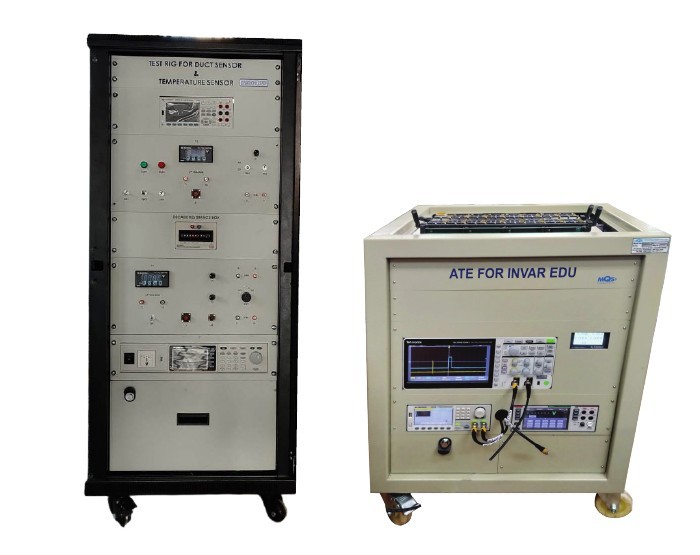
X-ray Verifies What Is Inside. ATE Verifies What It Does.
Typical defence test applications
Application
Final testing during assembly and pre firing
What is verified
Functional test, response time and launch mechanism.
Application
Validation of a mechanical fuze
What is verified
Shutter assembly opening time and speed.
Application
Missile wire spool performance while unwinding
What is verified
Resistance and tension measurement at high speed.
Application
Inner gimbal of a gyro used in an anti tank missile
What is verified
Drift parameters and gyro stabilization rate.
Application
Final testing and integration stage testing
What is verified
Functional verification of the torpedo and sub assemblies.
Application
Critical airborne wire harness
What is verified
Continuity, isolation resistance and insulation strength.
Two ATE architectures
Embedded test system with customized interface, display and optional reporting.
Software driven system using analog and digital measurement sources for high speed testing, real time acquisition and visualization.
Application engineering
MQS starts with the defence requirement first, then engineers the inspection or test architecture around it. The goal is technical fit, repeatability and long term usability, not forcing the application into a fixed catalogue configuration.
Component, interface, material, geometry
Internal integrity, functional test, fault diagnosis or both
X-ray/CT source, detector, manipulator or ATE measurement architecture
Handling, controls, fixtures, sequences, analysis and reporting
A standard platform where suitable, or a custom engineered configuration
Indigenous engineering
For MQS, indigenization means engineering ownership and the ability to configure the system around the mission requirement. It brings together X-ray integration, electronics, electrical engineering, instrumentation, mechanics, software and automation so the final solution can be adapted, supported and evolved without reducing the requirement to a lowest cost substitute.
Standard where it works. Custom where it matters.
Proven architectures provide a strong starting point. When the requirement changes in geometry, penetration, manipulation, test interface, automation, software or reporting, MQS can engineer the configuration around the application.
ATE design attributes
COTS modules can be used to support operation and maintainability.
Flexible architecture can be developed for future requirement changes.
Automation can reduce reliance on manual skill and improve repeatability.
ATE can include self test during startup.
Portable or battery operated configurations can be considered depending on the usage environment.
ATE can be designed to meet stringent defence requirements such as JSS 55555 where applicable.
Custom reports and built in storage can preserve large numbers of test results.
Test conditions can be preset or made configurable to match the test procedure.
Capability map
A defence program may need internal inspection, functional testing, or both. The capability map below shows how the three MQS pillars can support different verification questions.
X-ray inspection · Is it sound?
Digital radiography of internal construction and assembly condition.
Automated X-ray inspection with rotation and indexing.
Portable real-time X-ray viewing for suspicious, concealed and hard-to-access objects.
Automated Test Equipments · Does it work?
Opening time and speed of the shutter assembly.
Final functional testing, response time and launch mechanism verification.
Drift parameter measurement and stabilization rate.
Functional verification during final testing and integration.
Continuity, isolation resistance and insulation strength.
Why MQS
Systems can be developed around user requirements when standard equipment does not fit the application.
Electronics, electrical, mechanical, instrumentation, software and electromechanical engineering can be combined in one solution.
X-ray / CT and ATE address different but complementary verification questions.
Custom controls, sequences, user interfaces, analysis and reporting can be integrated into the system.
Flexible architectures and service capability support maintainability and future evolution.
MQS has delivered defence applications across fuzes, ammunition, missile launchers, missiles, torpedoes, gyros and wire harnesses.
Resources
Move directly from the capability to the relevant product information.
Bring Us the Component. Bring Us the Test Requirement.
Share the component, interface, inspection objective, test parameters and workflow. MQS can recommend a proven platform or engineer a configuration around the requirement.
Share your part, material and defect type — our engineers will recommend the right MQS system.